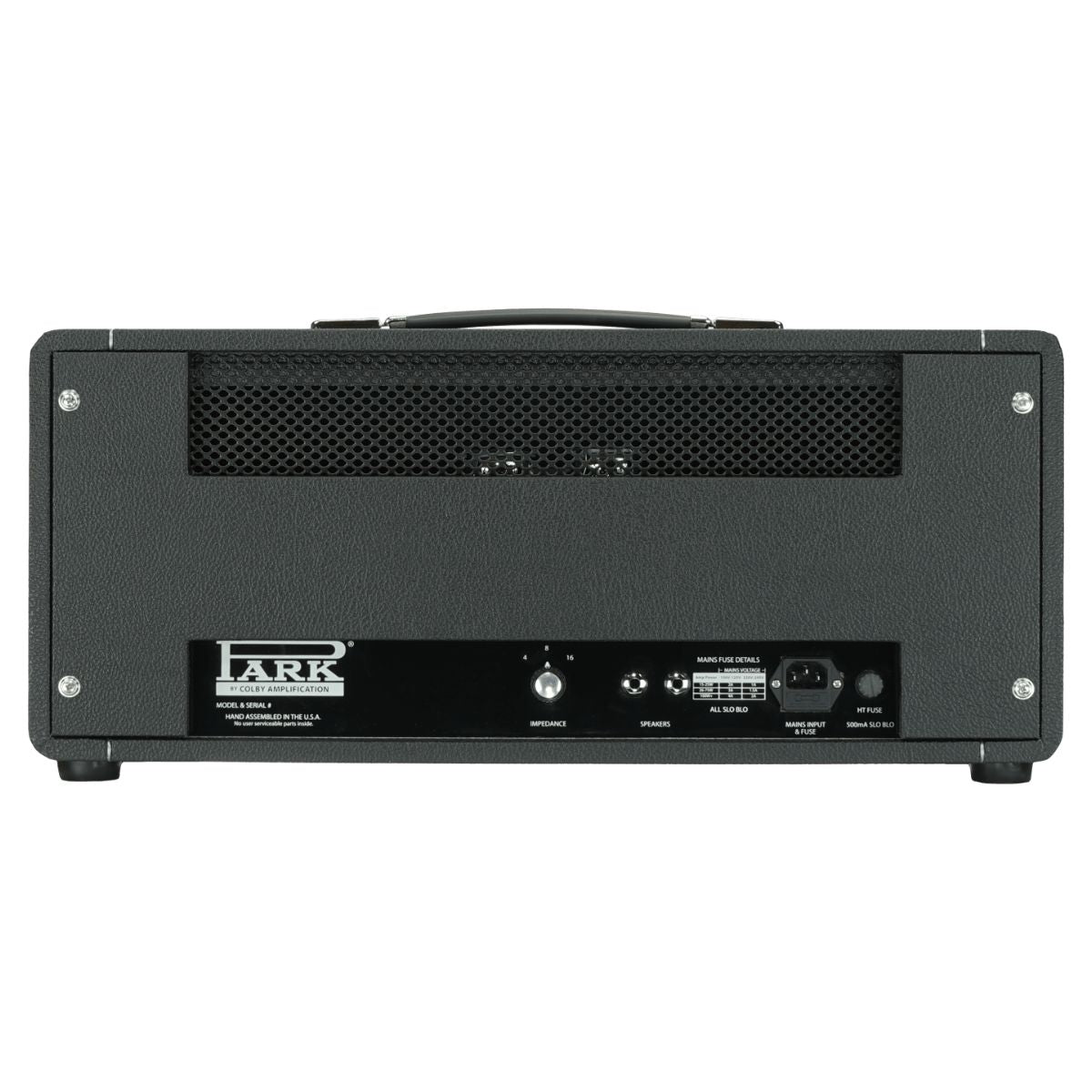


Park P75 Classic (1969) Custom Guitar Amplifier Head
The Park P75 Classic (1969) Custom Guitar Amplifier Head brings serious vintage amp character to your rig. Built for players who want a big, powerful tone, it delivers plenty of punch while staying clear and responsive. It also works especially well with pedals, making it a great choice for guitarists who like to shape their own sound.
Park P75 Classic (1969) Custom Guitar Amplifier Head Review
The Park P75 is the most powerful model in the Park Plexi lineup. Its pair of KT88 power tubes provides 50 watts of clean power and up to 90 watts when fully cranked, with strong low end and a tight, punchy response. The four inputs are split across two channels, letting you use each channel alone or blend them together. A Post Phase Inverter Master Volume also lets you push the amp's character at lower volume levels.
Park P75 Classic (1969) Custom Guitar Amplifier Head Features
- Big, powerful vintage-inspired guitar tone
- Great choice for using with guitar pedals
- Two channels give you more tonal options
- Four inputs let you mix both channels
- Strong low end adds extra punch
- Built tough for touring and live use
Park P75 Classic (1969) Custom Guitar Amplifier Head Specs
- 50 watts clean and 90 watts fully cranked
- 2 x KT88 output tubes
- 2 channels with 4 inputs
- Post Phase Inverter Master Volume
- 18 mm birch plywood construction
- World voltage and impedance selectors
- English Partridge specification transformers
- Hand wired to Harry Joyce standards
- Based on a circuit designed by Dave Reeves