

Death By Audio Amp Crash Pedal
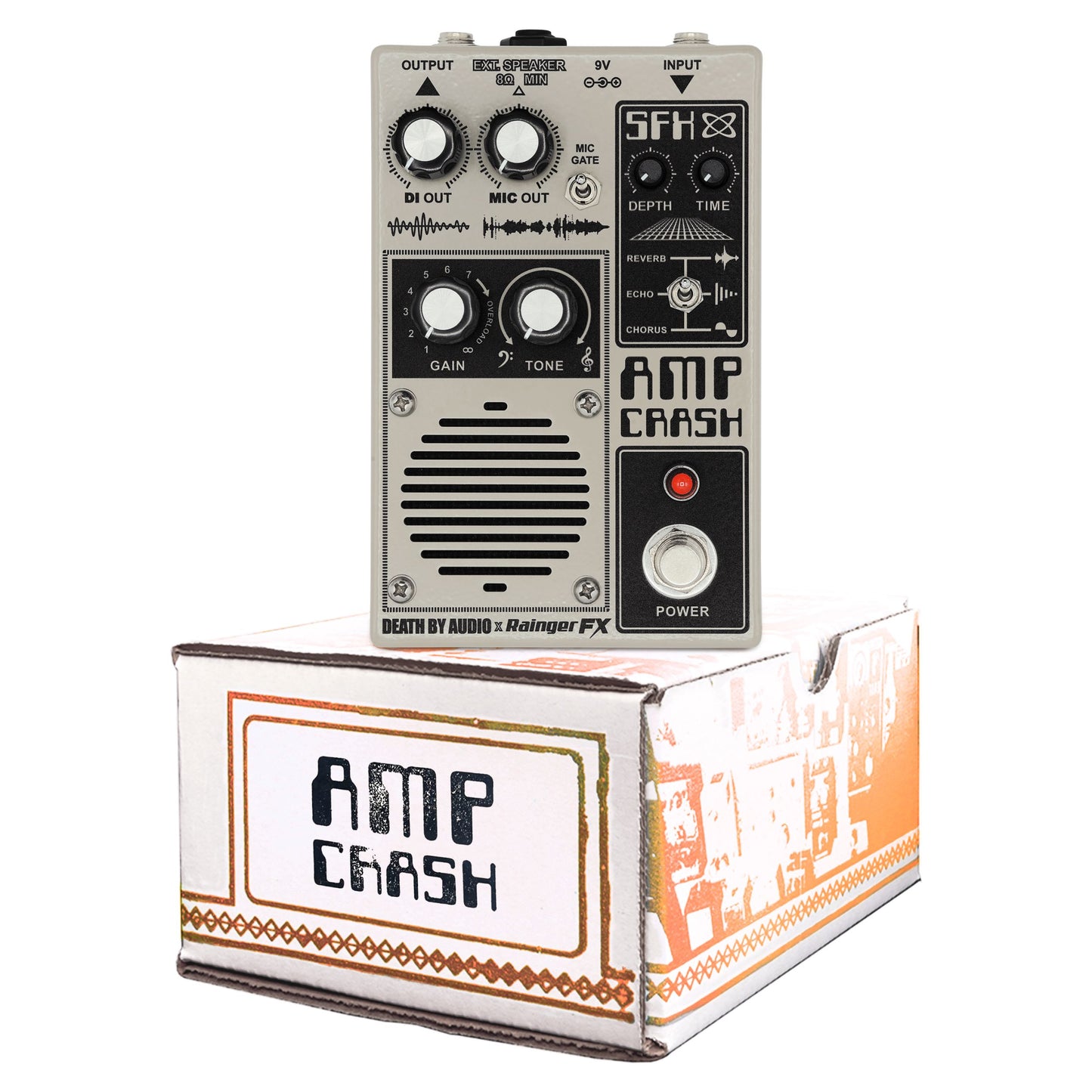
The Death By Audio Amp Crash Pedal is a unique collaboration between Death By Audio and Rainger FX that brings a real amplifier, speaker, and microphone together inside a compact stompbox. Instead of simply trying to replicate the sound of a traditional amp, the Amp Crash actually contains a 3-watt amplifier, a 2-inch speaker, and a microphone that interact with each other as you play. This creates everything from warm overdrive and gritty distortion to thick fuzz, natural feedback, rich harmonics, and unpredictable textures that can change with your playing. You can blend the direct amp signal with the microphone signal and add built-in Reverb, Echo, or Chorus effects for even more creative possibilities. Whether you are recording, practicing, building unusual guitar tones, or experimenting with your pedalboard, the Death By Audio Amp Crash Pedal gives you a real amp experience in a compact and highly creative package.
DBA Amp Crash Review
The Death By Audio Amp Crash Pedal is unlike a typical guitar effects pedal. Rather than using electronics to recreate the character of an amplifier, it puts a real 3-watt amplifier, 2-inch speaker, and microphone inside the pedal itself. When you plug in your guitar, the amplifier drives the speaker, and the microphone captures the result. That physical interaction creates a lively response that changes as you play, giving the Amp Crash a character that is difficult to get from a standard distortion, fuzz, or amp simulation pedal. It can sound raw and unpredictable, but that is exactly what makes it so much fun to use.
At the heart of the Amp Crash is the relationship between the internal amplifier, speaker, and microphone. You can blend the direct amplifier signal with the microphone signal using the DI Out and Mic Out controls. This gives you control over how much of the direct sound and mic'd sound you want in the final output. Keep the direct signal more prominent for a focused tone, or bring up the microphone signal to capture more of the character created by the tiny speaker. You can also combine the two to find a balance that fits your guitar, amp, recording setup, or pedalboard.
The Gain control gives the internal amplifier plenty of range. At lower settings, the Amp Crash can produce responsive tones that move from clean into warm overdrive as you play harder. Push the Gain further and the pedal becomes much more aggressive, delivering thick distortion, crushing fuzz, harmonic feedback, and wild oscillation. The Tone control lets you shape the amplifier's character, shifting the sound from deep and bass-heavy to brighter and more focused. This makes it easy to dial in a useful setting or push the pedal into stranger territory when you want something more experimental. Whether you are looking for a gritty rhythm sound, a saturated lead tone, or something that sounds completely out of control, the Amp Crash gives you plenty of room to explore.

The built-in Reverb, Echo, and Chorus effects take the concept even further. Select Reverb for everything from a small room feel to a huge, cavernous effect. Echo provides tape-style repeats that can add depth and movement to your playing, while Chorus ranges from subtle modulation to more intense sounds with a metallic edge. The Depth and Time controls adjust the selected effect, allowing you to quickly move between simple tones and much more dramatic settings. Because the effects are built around the Amp Crash's unusual amplifier-and-microphone setup, they can become part of the overall character rather than simply sitting on top of your guitar tone.
You can also use the Amp Crash with an external speaker cabinet via its 8-ohm minimum speaker output. Connecting an external speaker automatically turns off the internal speaker, giving you another way to use the pedal in your setup. This makes it more flexible than a pedal designed only for use through a traditional amplifier. It can become part of a pedalboard, a recording rig, a practice setup, or an experimental guitar system.
For recording, the Amp Crash is especially interesting. The internal microphone captures the actual sound of the speaker inside the pedal, so you are working with a real amplifier and speaker rather than a digital recreation. That can help add grit, compression, feedback, and natural character to recordings. It can also be useful when you want to create a guitar part that stands apart from more polished amp tones. Turn up the Gain, adjust the microphone blend, add some Echo or Reverb, and you can quickly move into territory that a conventional pedal may not reach.

The Death By Audio Amp Crash Pedal is also a great choice for players who enjoy experimenting. It does not always behave like a predictable conventional effect, and that is part of its appeal. Small changes to the Gain, Tone, microphone blend, or effects can reveal new textures. Natural feedback and harmonic interaction can become part of the performance, allowing the pedal to respond to the room and the way you play. It feels less like selecting a preset and more like discovering what the instrument can do.
Despite everything that's happening inside, the Amp Crash remains compact enough to fit on a pedalboard or in a recording setup. It draws 300mA from a 9V DC center-negative power supply and does not use batteries. The top-mounted connections keep the pedal practical for a pedalboard, while the rugged design is backed by Death By Audio's lifetime warranty. If you want a conventional, predictable amp simulator, there are plenty of options available. If you want something physical, responsive, unusual, and capable of sounds that can surprise you, the Death By Audio Amp Crash Pedal is in a category of its own.
From gritty overdrive and thick fuzz to feedback, echo, reverb, and strange harmonic textures, the Amp Crash offers a huge amount of creative potential. It can sound great when you want a useful guitar tone, but it also encourages you to push past the expected and see what happens. For guitarists, producers, and experimental musicians who want to add a real amp experience to a pedal-sized setup, the Death By Audio Amp Crash Pedal is a remarkably versatile tool.
Amp Crash Death By Audio Effect Pedal Controls
Power Footswitch
Engages or bypasses the pedal and turns the internal speaker on or off. The pedal uses buffered bypass.
DI Out
Controls the level of the direct amplifier signal sent to the output.
Mic Out
Controls the level of the internal microphone signal sent to the output, letting you blend the mic sound with the direct amp signal.
Mic Gate
Turns on a noise gate for the internal microphone. The gate responds to the instrument input to help control unwanted noise.

Gain
Controls the gain of the internal amplifier. Turn it toward Overload for heavier distortion, fuzz, and wild oscillation.
Tone
Shapes the amplifier's tone, ranging from deep and bass-heavy sounds to brighter, more focused tones.
SFX Selector
Chooses between the three built-in effects: Reverb, Echo, and Chorus.
Depth
Controls the amount of the selected effect. Turn it fully down to bypass the effects.
Time
Adjusts the timing of the selected effect. Depending on the setting, it controls Reverb decay, Echo delay time, or Chorus speed.
Amp Crash DBA Guitar Effect Features
- Real mini amp, speaker, and microphone built right into the pedal
- Creates everything from warm overdrive to wild fuzz
- Mix the direct and microphone sounds to shape your tone
- Built-in Reverb, Echo, and Chorus effects
- Great for recording, practice, and creative experiments
- Connect an external speaker for even more possibilities
Death By Audio Amp Crash Amplifier Specs
- 3-watt internal amplifier
- 2-inch internal speaker
- Internal microphone
- 8 ohm minimum external speaker output
- 9V DC power, 2.1mm center negative
- 300mA current draw
- Buffered bypass
- No battery operation
- Top-mounted jacks
- Lifetime warranty

DBA Amp Crash Amplifier Pedal Dimensions
- Height: 2.85 inches
- Width: 5.9 inches
- Depth: 3.76 inches
- Weight: 1.19 lbs
More from Death By Audio
Death By Audio Amp Crash Pedal FAQs
What is the Death By Audio Amp Crash Pedal?
What kind of sounds can the Amp Crash create?
Does the Death By Audio Amp Crash Pedal have a built in speaker?
Can I connect an external speaker to the Amp Crash?
Can I use the Amp Crash for recording?
Does the Amp Crash have built in effects?
Is the Death By Audio Amp Crash Pedal battery powered?
Does the Amp Crash use true bypass?
What does the Mic Gate do?
Is the Amp Crash good for practice?
What makes the Amp Crash different from an amp simulator?
Does the Death By Audio Amp Crash Pedal come with a warranty?
Where can I find the online manual for the Death By Audio Amp Crash Pedal?